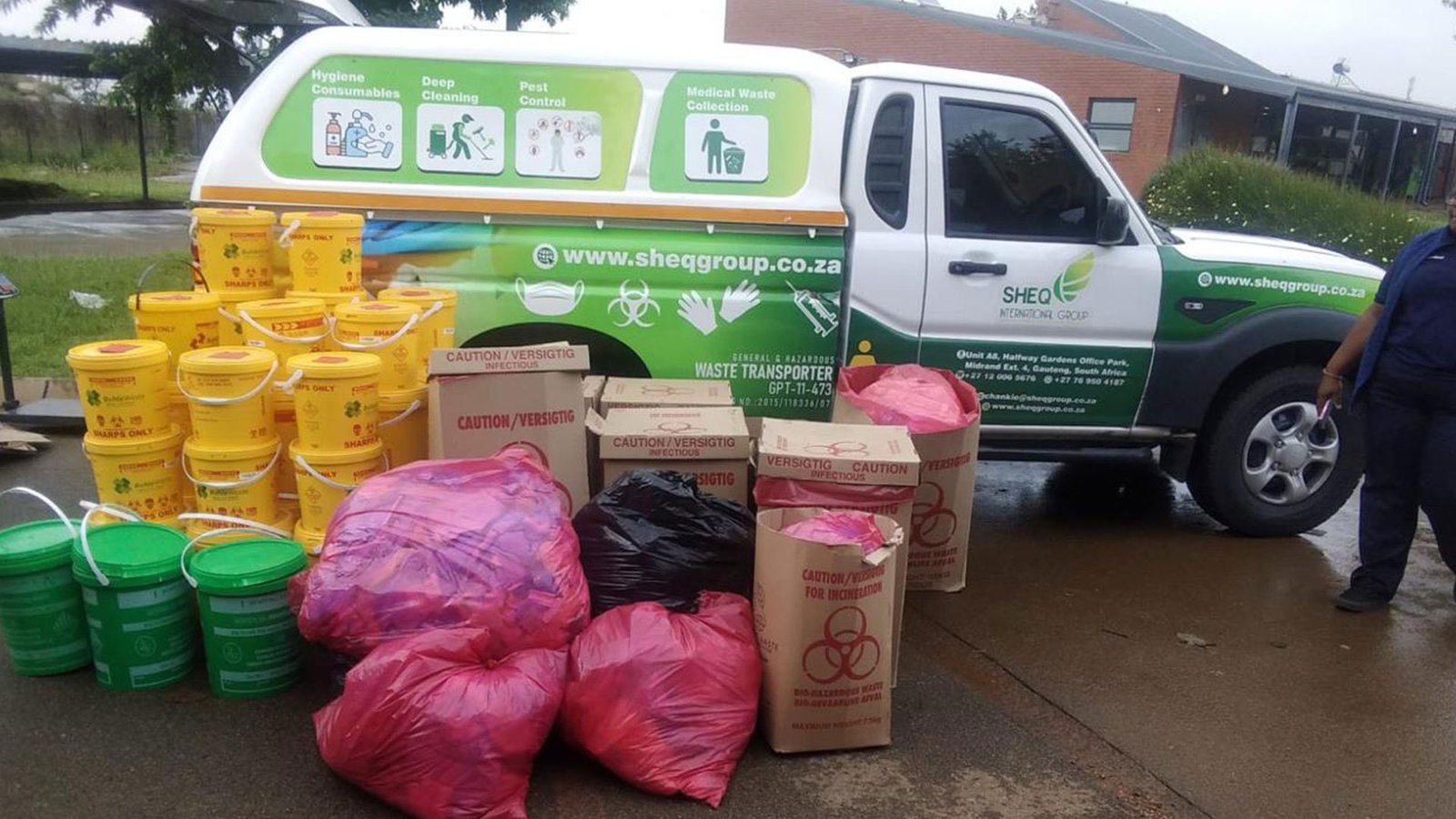
Medical waste is inevitable in healthcare. From hospitals and clinics to laboratories and dental practices, every facility that provides medical care generates waste that must be handled with extreme care.
But here’s the truth: Improper medical waste disposal puts everyone at risk. Healthcare workers. Patients. Waste handlers. The general public. The environment.
At SHEQ Group, we specialize in the safe, compliant collection and disposal of medical waste. As a registered Waste Transporter (GPT-11-473) and member of the Institute of Waste Management of Southern Africa (IMWISA), we help healthcare facilities across South Africa manage their medical waste responsibly.
In this post, we share best practices for medical waste disposal that every healthcare facility should follow.
What is Medical Waste?
Medical waste (also called healthcare waste) refers to any waste generated during the diagnosis, treatment, or immunization of humans or animals. This includes:
-
Infectious waste: contaminated with blood or bodily fluids
-
Sharps: needles, syringes, scalpels, broken glass
-
Pathological waste: human tissues, organs, body parts
-
Pharmaceutical waste: expired or unused medications
-
Chemical waste: laboratory reagents, disinfectants
-
Radioactive waste: from radiotherapy or research
Each type requires specific handling and disposal methods to ensure safety.
Why Proper Medical Waste Disposal Matters
🏥 Protecting Healthcare Workers
Doctors, nurses, and cleaning staff are on the front line. Every day, they face potential exposure to needlestick injuries, infectious materials, and hazardous chemicals. Proper segregation and containment at the point of generation is the first line of defense.
👨👩👧👦 Protecting the Public
When medical waste is disposed of improperly, it can end up in landfills, waterways, or public spaces. Children playing near dump sites, waste pickers scavenging for recyclables, and communities living near illegal dumping grounds are all at risk.
🌍 Protecting the Environment
Medical waste can contaminate soil and water, harm wildlife, and release toxic substances into the environment. Proper treatment and disposal methods—such as incineration or autoclaving—neutralize these risks.
⚖️ Staying Compliant
In South Africa, medical waste disposal is strictly regulated under the National Environmental Management: Waste Act (NEMWA) and enforced by provincial authorities. Non-compliance can result in:
-
Heavy fines
-
Criminal charges
-
Closure of facilities
-
Irreparable reputational damage